Built from what you eat
Hair, skin and nails are among the fastest-renewing tissues in the body. They are made largely of protein, and they rely on a steady supply of vitamins and minerals. A varied diet with enough protein comes first; supplements can help fill the gaps.
The nutrients that matter
These are the nutrients with authorised roles for hair, skin and nails:
- Biotin contributes to the maintenance of normal hair and normal skin.
- Zinc contributes to the maintenance of normal hair, nails and skin.
- Selenium contributes to the maintenance of normal hair and nails.
- Vitamin C contributes to normal collagen formation for the normal function of skin.
- Riboflavin (B2) and niacin (B3) contribute to the maintenance of normal skin.
On your plate
Eggs, fish, meat and dairy provide protein, zinc and B vitamins. Nuts and seeds add selenium and zinc, while fruit and vegetables such as oranges, peppers and strawberries provide vitamin C.
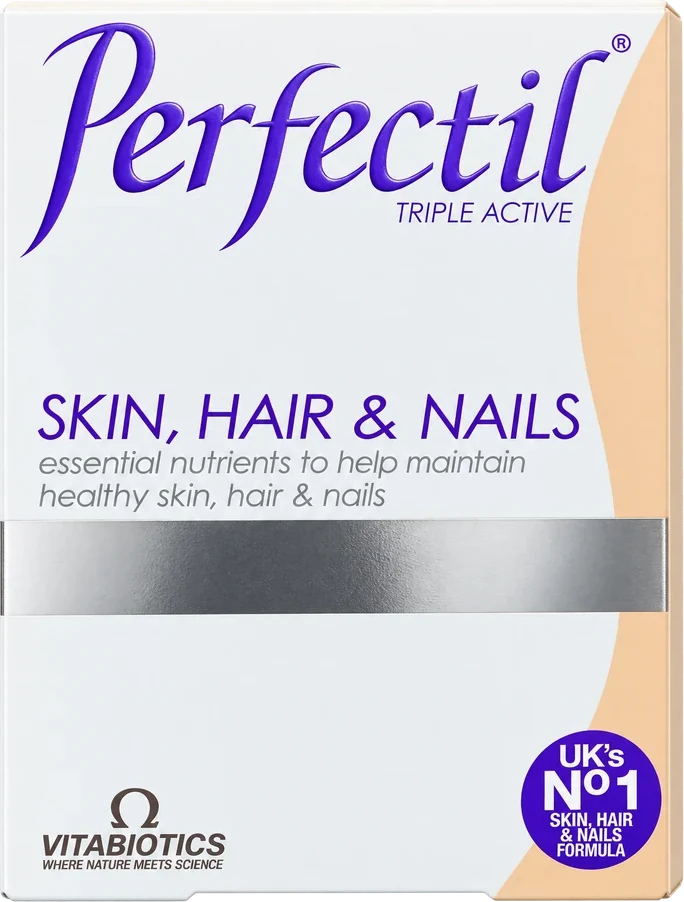
A formula such as Perfectil brings these nutrients together in one daily capsule, as a complement to a good diet and not a replacement for it.
Everyday habits
Protect your skin from strong sun, drink enough water through the day, sleep well and be gentle with heat styling. Results from nutrition take time, because new hair and nails grow slowly.
When hair loss needs a doctor
The NHS notes that some hair loss is temporary and can follow an illness, stress, weight loss or iron deficiency. See a doctor if hair loss is sudden, comes out in patches or clumps, or is worrying you — a blood test may find a cause that needs treating.
This information is for general education and does not replace advice from your doctor or pharmacist.
Sources
We cite public health authorities only.