Two nutrients, one job
Calcium is needed for the maintenance of normal bones and teeth. Vitamin D contributes to the normal absorption and utilisation of calcium and phosphorus. In other words, calcium is the building material and vitamin D helps the body take it up and use it.
How much you need
The NHS says adults need 700mg of calcium a day, and that 1,500mg or less a day from supplements is unlikely to cause harm. For vitamin D, 10 micrograms a day is enough for most people.
Food first
Good calcium sources include milk, cheese and yoghurt, green leafy vegetables such as broccoli and cabbage, soya drinks with added calcium, and fish where you eat the bones, such as sardines. Vitamin D comes from oily fish, egg yolks, red meat and fortified foods — and from sunlight on the skin.
Bones need more than nutrients
The NHS highlights weight-bearing and resistance exercise as particularly important for bone density. Walking, climbing stairs and strength exercises all count; swimming and cycling are good for the heart but are not weight-bearing.
- Stay active most days of the week.
- Do not smoke.
- Keep alcohol low.
Choosing a combined supplement
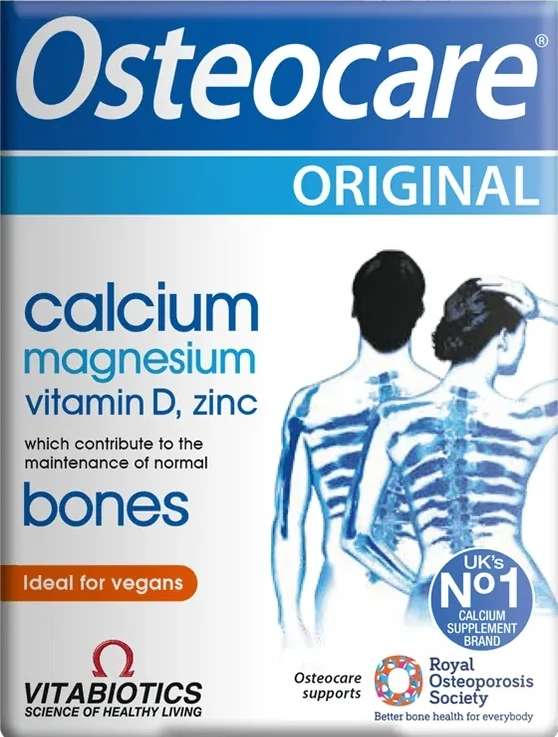
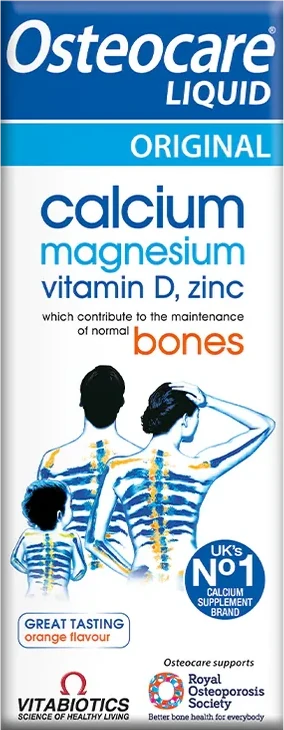
A combined formula such as Osteocare provides calcium with vitamin D, magnesium and zinc, which contribute to the maintenance of normal bones. Osteocare Liquid is an option for people who prefer not to swallow tablets.
Calcium can affect how some medicines are absorbed, so if you take regular medicines, ask your pharmacist how far apart to take them.
This information is for general education and does not replace advice from your doctor or pharmacist.
Sources
We cite public health authorities only.