Sunshine is not a guarantee
The body makes vitamin D when sunlight falls on bare skin. But the NHS lists groups who may not make enough even when the sun is strong: people who are rarely outdoors, people who usually wear clothes that cover most of their skin, and people with darker skin.
Many of us in Iraq fit one or more of these: we cover up, we spend the hottest hours indoors, and our working days are often inside. Living in a sunny country is not the same as getting sun on your skin.
What vitamin D does
Vitamin D contributes to the normal absorption and utilisation of calcium and phosphorus, to the maintenance of normal bones, teeth and muscle function, and to the normal function of the immune system.
How much, and how much is too much
The NHS advice is 10 micrograms (400 IU) a day for adults and children from 1 year old, and 8.5 to 10 micrograms for babies. People who cover up or are rarely outdoors are advised to take it all year round.
More is not better. The NHS says adults should not take more than 100 micrograms (4,000 IU) a day, children aged 1 to 10 no more than 50 micrograms, and babies under 12 months no more than 25 micrograms — unless a doctor advises otherwise after a blood test.
Food helps, but only a little
Few foods contain much vitamin D. The best are oily fish such as salmon, sardines and mackerel, egg yolks, red meat and fortified foods. That is why supplements are part of the official advice.
Practical tips
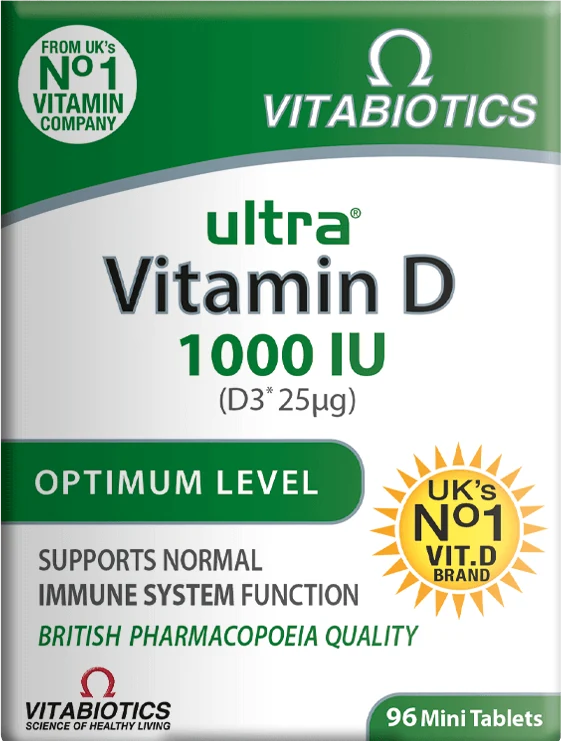
Vitamin D is a fat-soluble vitamin, so many people find it easiest to take with a meal. A single daily product such as Ultra Vitamin D3 is simple to remember.
- Add up the vitamin D in everything you take — multivitamins and calcium products often contain it too.
- If you have a medical condition or take regular medicines, check with your pharmacist first.
- Aching bones or muscle weakness deserve a doctor’s visit, not guesswork.
This information is for general education and does not replace advice from your doctor or pharmacist.
Sources
We cite public health authorities only.