Why women’s needs differ
A woman’s body goes through monthly cycles, may carry a pregnancy, and later faces faster bone loss after the menopause. Each stage changes which nutrients deserve attention.
Iron
The NHS says women aged 19 to 49 need 14.8mg of iron a day — much more than men’s 8.7mg — because of blood lost during periods. Iron contributes to the normal formation of red blood cells and haemoglobin. If your periods are heavy or you feel constantly tired, see a doctor for a blood test.
Folic acid, if a pregnancy is possible
Many pregnancies are not planned, and the baby’s neural tube forms in the first weeks. The NHS advice is 400 micrograms of folic acid a day for any woman who could become pregnant. Folate contributes to maternal tissue growth during pregnancy.
B vitamins and vitamin D
Vitamin B6 contributes to the regulation of hormonal activity. Vitamins B6 and B12 contribute to normal energy-yielding metabolism, and folate and B12 contribute to the reduction of tiredness and fatigue. Vitamin D contributes to the normal function of the immune system and the maintenance of normal bones.
Keeping it simple
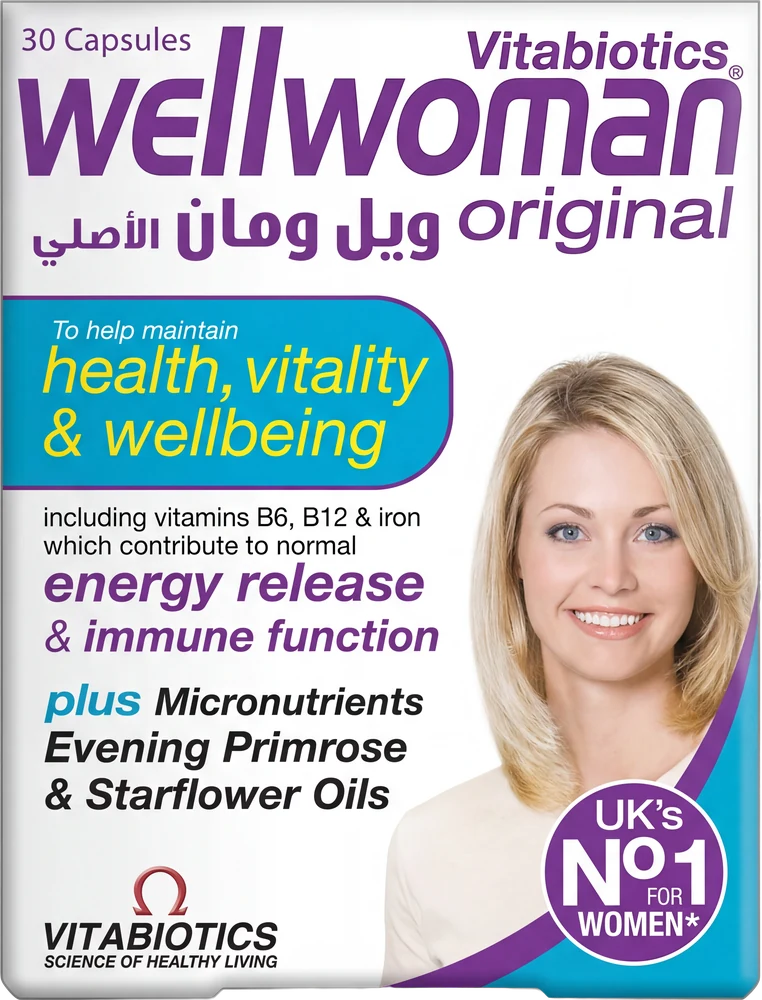
Rather than stacking separate tablets, one multivitamin designed for women — such as Wellwoman, which includes iron, 400 micrograms of folic acid, B6, B12 and vitamin D — covers the basics. Build the rest on a varied diet and regular activity, and check with your pharmacist if you take other medicines.
This information is for general education and does not replace advice from your doctor or pharmacist.
Sources
We cite public health authorities only.